On Sunday, February 8, the Seattle Seahawks will face the New England Patriots at Super Bowl LX at Levi’s Stadium in Santa Clara. During the week leading up to the event, there will be various public events throughout the Bay Area. The Bay Area, known for transportation innovations like rideshares such as Uber and Lyft and now autonomous cars, also offers plentiful public transportation options that easily bypass traffic on many congested corridors. Compared to the last time the Bay Area hosted the Super Bowl ten years ago, these options have improved with more lines, more stations, and faster service. With the updated version of Clipper, visitors to the Bay Area can easily board and pay fares on public transit by simply tapping their contactless debit or credit cards, or smart devices with Google or Apple Pay.

For non-Bay Area locals, most events before the Super Bowl will take place at various locations in San Francisco and San Jose. Each city has its own local transit system (Muni in San Francisco, VTA in San Jose). BART and Caltrain are regional rail systems connecting the two cities. Despite having different transit providers, all use the Clipper regional fare payment system and accept contactless debit or credit cards, as well as smart devices. Additionally, Bay Wheels, a bike share system operated by Lyft, has stations throughout San Francisco and in downtown San Jose.
February 2: Opening Night in San Jose
Location: San Jose Convention Center
VTA Light Rail has a stop in front of the center. The nearest Caltrain station is San Jose Diridon, where riders can transfer to light rail or use bike share. The nearest BART station is Berryessa/North San Jose. Bus connections are available to Santa Clara Street, about a 10-minute walk to the convention center.
February 3-7 Super Bowl LX Experience
Location: Moscone Center
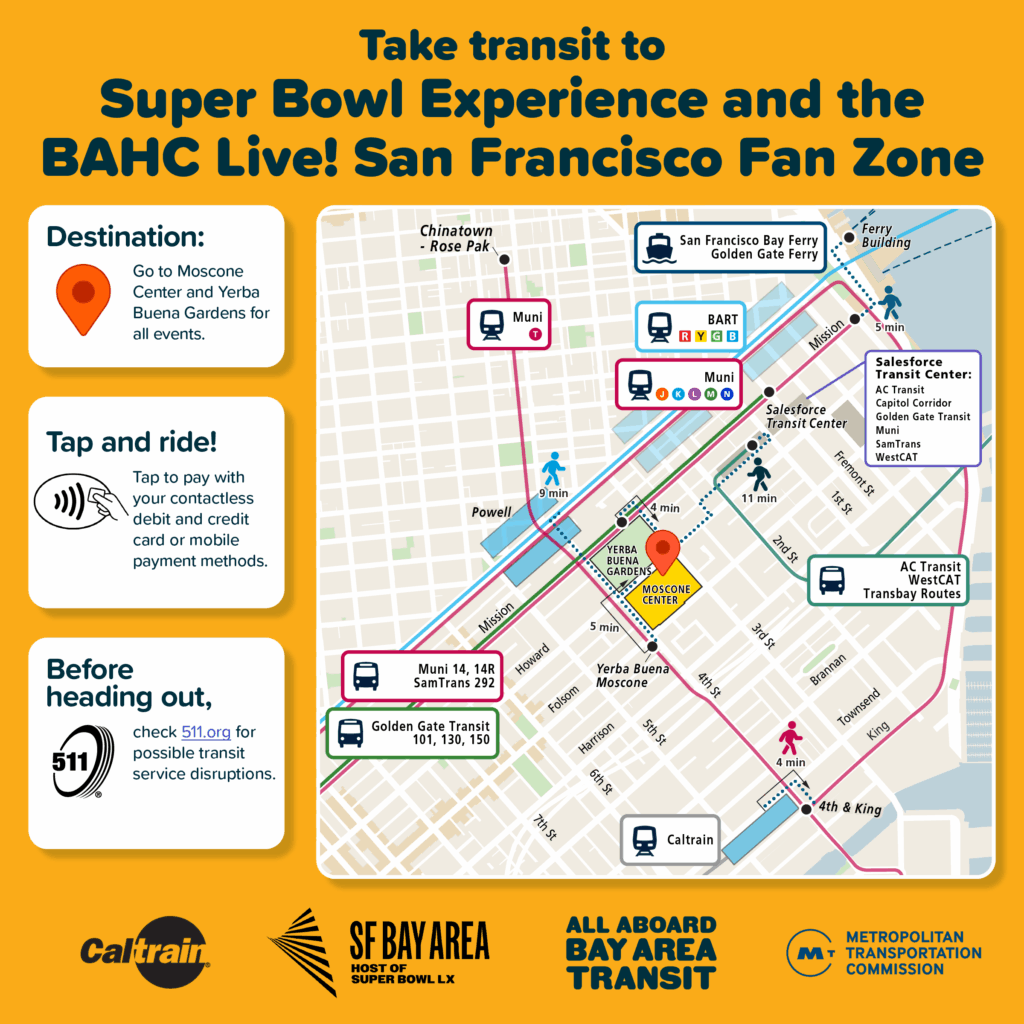
Moscone Center is located south of Market Street in downtown San Francisco, just blocks from Union Square. It is within walking distance of BART and Muni. From Caltrain, the location is about a 15-minute walk from 4th & King Station or a short ride on Muni’s T Line.
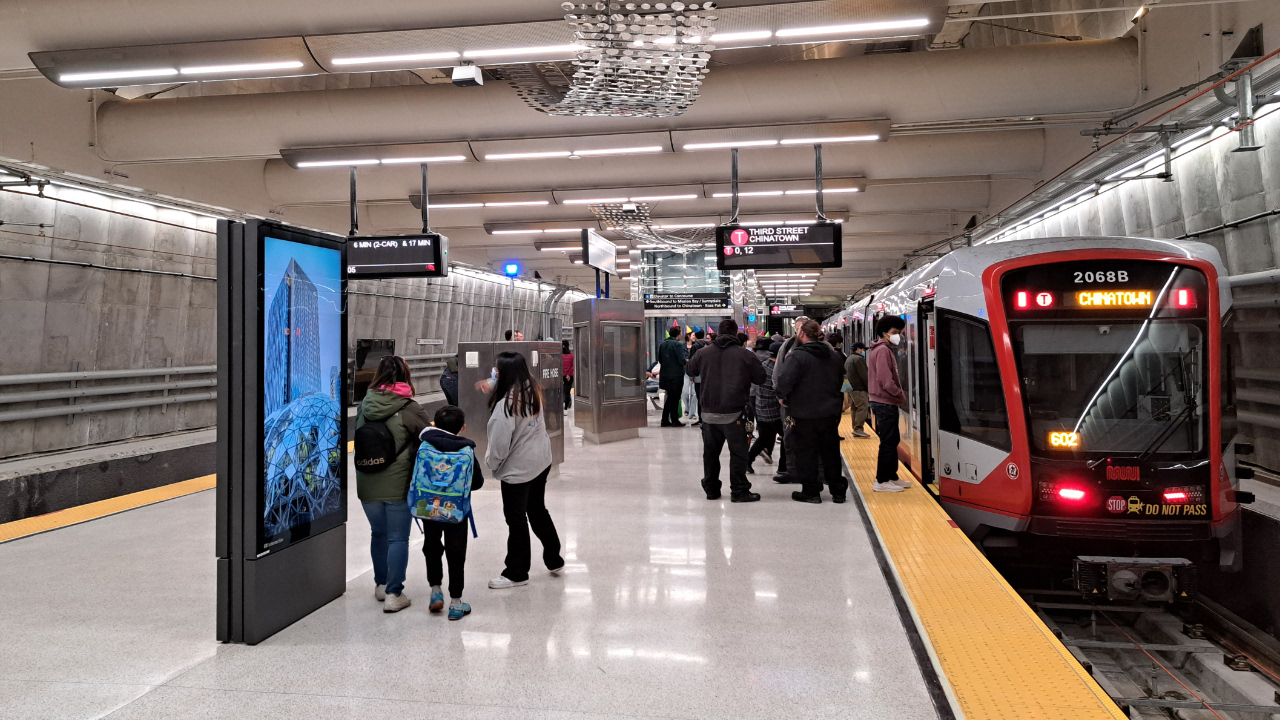
Streets surrounding the Moscone Center will have lane closures or complete street closures, affecting access for rideshare and autonomous cars. Surface Muni buses will continue to operate through the closed sections. The Muni Metro T Line offers traffic-free access between Chinatown, Market Street, and Mission Bay, with a subway stop near Moscone Center.
February 4-7: NFL Culture Club at The Pearl
Location: 601 19th Street, San Francisco
The location is less than a block from the Muni T Line stop (20th Street), which connects with BART at Market Street. It’s also just a few blocks from Caltrain at the 22nd Street Station. Some surrounding streets will have no parking zones. The block on 19th Street between Tennessee and 3rd Street will be closed to vehicle traffic. Passenger loading zones will be located on 20th Street west of 3rd Street.
February 7: Taste of the NFL
Location: The Hibernia, 1 Jones Street, San Francisco
The venue is a short walk from the Civic Center/United Nations Plaza BART Station. The blocks on Jones and McAllister streets in front of the venue will be closed to vehicle traffic. Some Muni bus routes will be rerouted around the closure.
February 5, 6, 7: NFL Honors, Studio 60 Concerts
Location: Palace of Fine Arts
This venue is served by Muni bus route 30, which connects with BART at Market Street and Caltrain at 4th & King Station.
February 5, 6, 7: BAHC Live! Concert Series
Location: Bill Graham Civic Auditorium
The venue is a short walk from the Civic Center/United Nations Plaza BART Station. The block on Grove Street in front of the venue will be closed to vehicle traffic.
February 5, 6, 7: NPU Live’s People’s Pregame
Location: Pier 80 – The Midway
The location is less than a block from the Muni T Line stop (Marin Street), which connects with BART at Market Street. It’s also about a 15 minute walk from Caltrain at the 22nd Street Station.
February 6: Shaq’s Fun House Super Bowl,
February 7: Sports Illustrated The Party,
February 8: Guy Fieri’s Flavortown Tailgate
Location: Cow Palace
This venue is served by Muni bus route 8, which connects with BART at Market Street and Balboa Park Station, the closest station to Cow Palace. Caltrain riders can exit at Bayshore Station, walk to Bayshore Blvd (Muni’s Arleta Station), and take the southbound Muni bus 8 or 9 to Cow Palace.
February 6: Madden Bowl,
February 7: Dave Chappelle
Location: Chase Center
A short walk from Muni’s T Line (UCSF/Chase Center), which connects with BART at Market Street. Caltrain riders can take the T Line or walk to Chase Center for about 15 minutes from 4th & King Station.
February 6-8: Downtown San Jose Celebrations
Events will take place at various venues in Downtown San Jose. The VTA 500 bus connects with Caltrain at San Jose Diridon and BART at Berryessa/North San Jose Station, with stops along Santa Clara Street in Downtown San Jose.
February 8: Super Bowl LX
Location: Levi’s Stadium
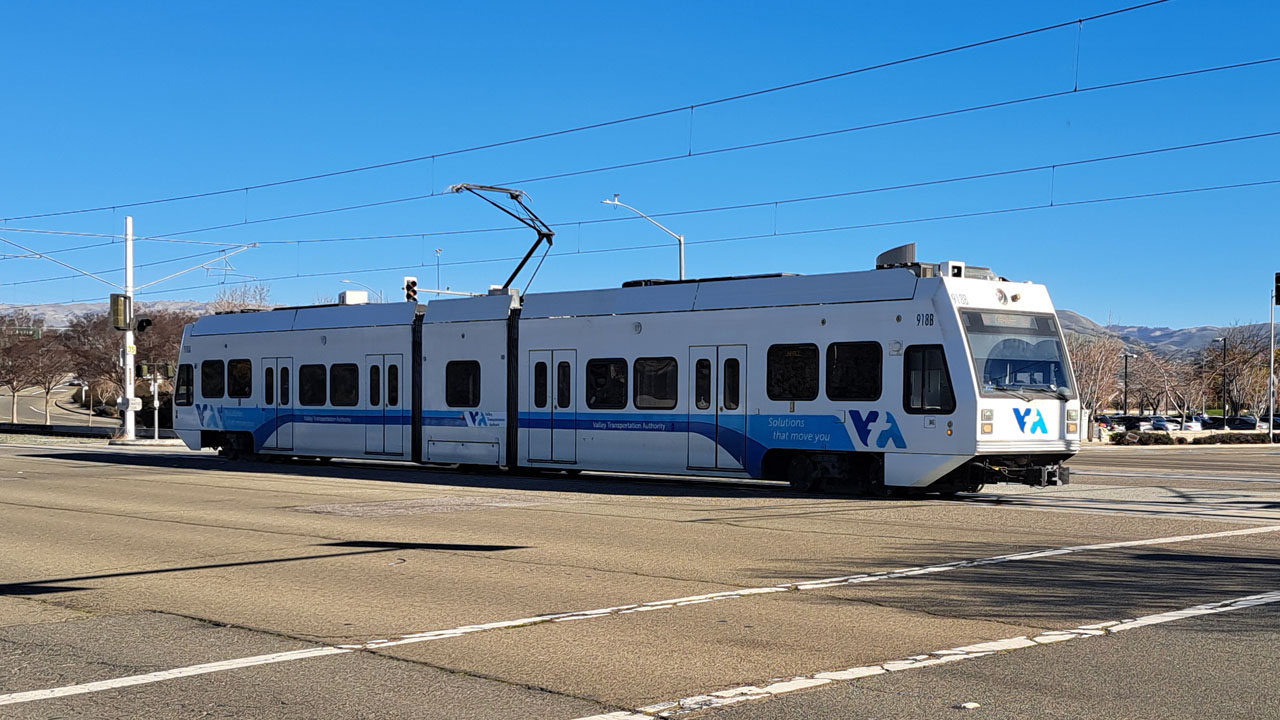
The venue is located in north Santa Clara, primarily served by VTA Light Rail. The line transports riders from Caltrain in Mountain View and BART in Milpitas to the stadium. For the Super Bowl, VTA will operate a special service pattern to increase capacity for the event and address heightened security needs.
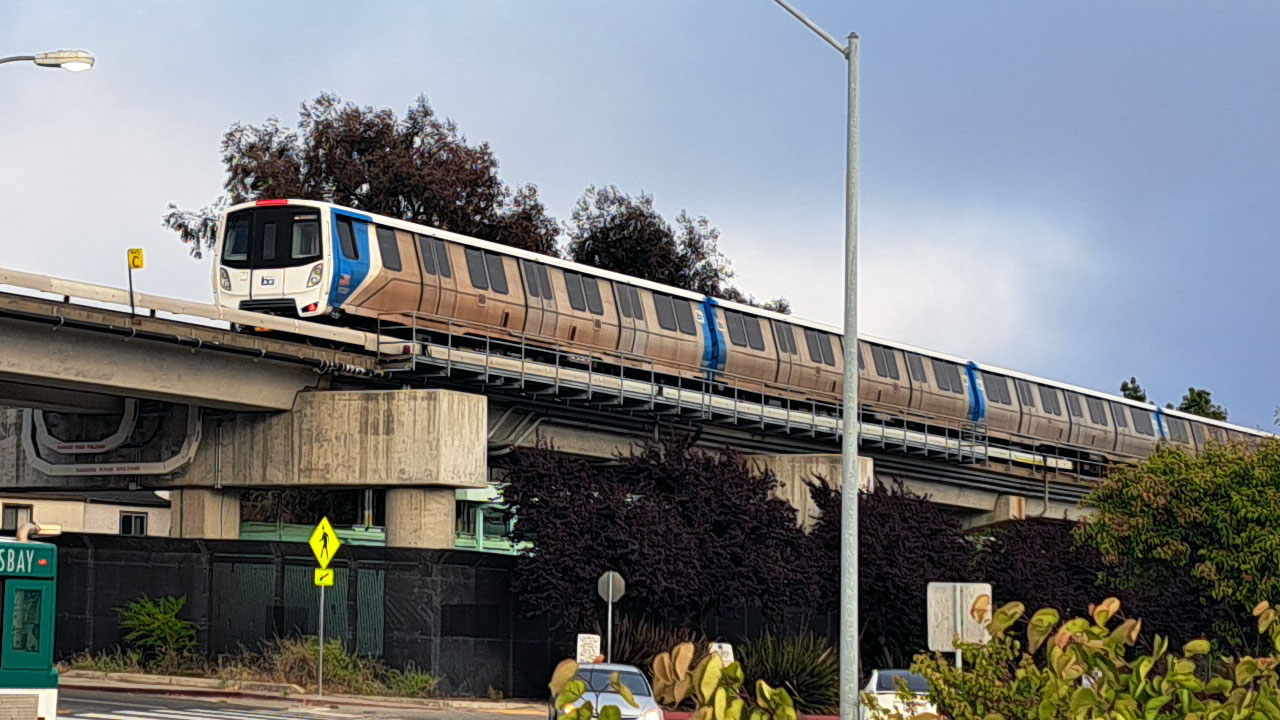
Caltrain runs every 30 minutes from San Francisco and BART runs every 20 minutes from San Francisco and 10 minutes south of Downtown Oakland.
VTA
Pre-event Light Rail service:
- Orange Line (west): Mountain View (Caltrain) to Great America
- Orange Line (east): Alum Rock to Milpitas (BART) to Lick Mill
- Green Line (north): San Jose Diridon to Downtown San Jose to Lick Mill
Light Rail service will run from Winchester to San Jose Diridon and from Santa Teresa to Downtown San Jose. Riders must transfer to the Green Line (north) to reach Levi’s Stadium or stations further north.

There is no rail service between Great America and Lick Mill stations. Riders traveling along the Orange Line through the stadium area must transfer to a bus bridge between Reamwood and Baypointe.
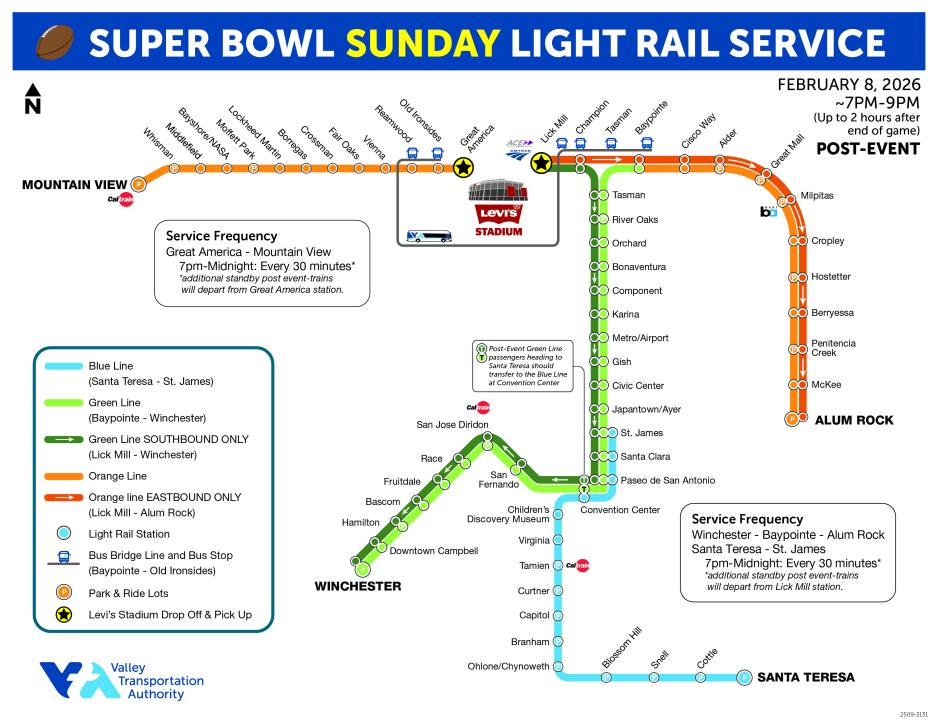
Post-event service will largely mirror the pre-event service. Riders heading to Downtown San Jose or BART should board trains at Lick Mill station on the east side of Levi’s Stadium (exit Gate F). Riders heading to Mountain View and Caltrain should board trains at Great America station (exit Gate A). Extra post-event service will run up to 2 hours after the end of the game, not including the trophy ceremony. Light Rail service will run every 30 minutes after that.
VTA local bus service is available from Cupertino, Sunnyvale, Santa Clara, and Valley Fair/Santana Row to Levi’s Stadium. Additional trips will be offered on two of three routes for Super Bowl.
There will be road closures in the stadium area, including Tasman Drive between Patrick Henry Drive and Lick Mill Blvd.
Please allow yourself plenty of time to travel, as all transit routes to Levi’s are expected to be crowded.
Amtrak and ACE (Clipper is not accepted)
Amtrak’s Capitol Corridor train stops just east of Levi’s Stadium. For the Super Bowl, Amtrak will operate on a special schedule, and all trains that day will require tickets to be purchased before the trip. There will be no onboard sales and tickets valid for other dates will not be accepted.
Altamont Corridor Express will operate a single round trip train for the Super Bowl.
February 8: public watch parties
Location: Oakland Henry J. Kaiser Center
A short walk from BART’s Lake Merritt Station.
Location: Thrive City at Chase Center
A short walk from Muni’s T Line.
Paying the fare
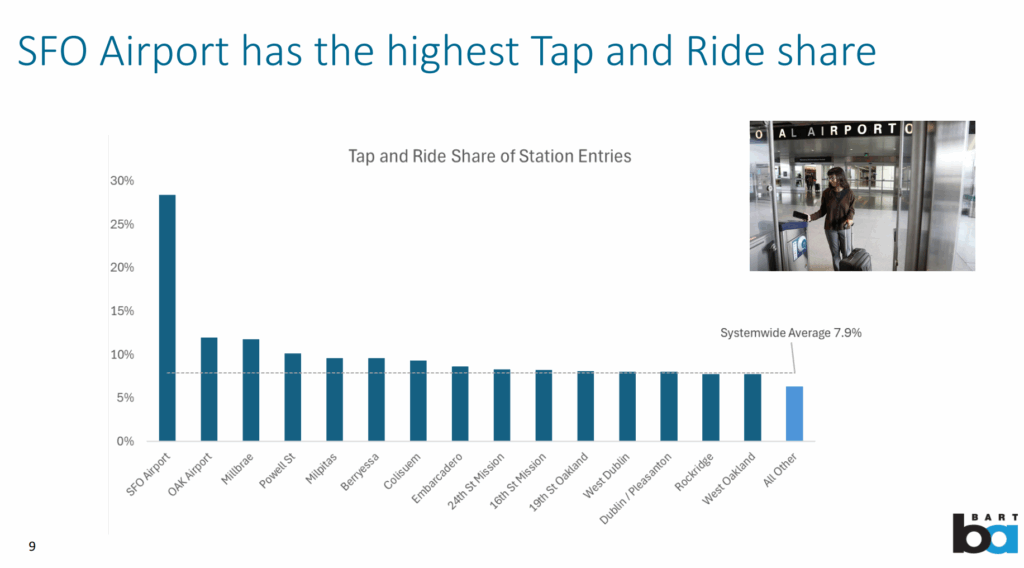
If your travel party consists of all adult riders, the most convenient way to pay fares is for each rider to use their contactless debit or credit card, or mobile device, and tap on the Clipper (regional fare payment system) reader at the station or onboard vehicles. This method saves you the hassle of buying a paper ticket, and transfer discounts are applied automatically.
Riders who prefer to pay with cash can purchase a paper ticket for Muni Metro, Caltrain, or VTA Light Rail, or buy a plastic Clipper card loaded with fares for all of these providers, including BART. There is no paper ticket option available for BART, but all buses accept cash fares in addition to Clipper cards.
If your party includes seniors or children who qualify for discounted fares, they can buy paper tickets for Muni Metro, Caltrain, or VTA Light Rail to receive the reduced fare. Using contactless payment or a regular plastic Clipper card will charge the adult fare. For BART, seniors and youth can only receive discounted fares with a special Clipper card, which must be obtained in advance.
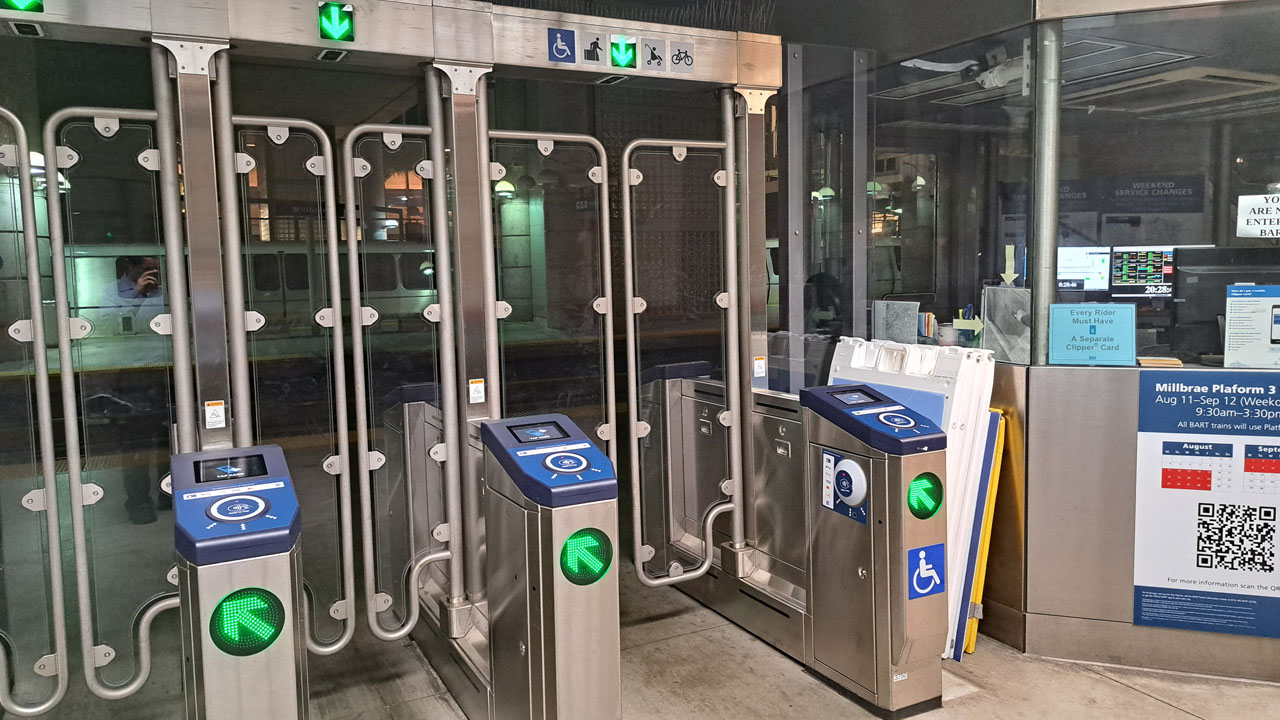
To ride BART, tap your Clipper card, contactless debit or credit card, or smart device with Apple or Google Pay on the reader (blue circle) at the faregate. Use the same card or device when entering and exiting the station. If paying with cash, use the ticket machines to buy a plastic Clipper card for each rider. Fares are deducted for each trip and vary based on distance traveled.
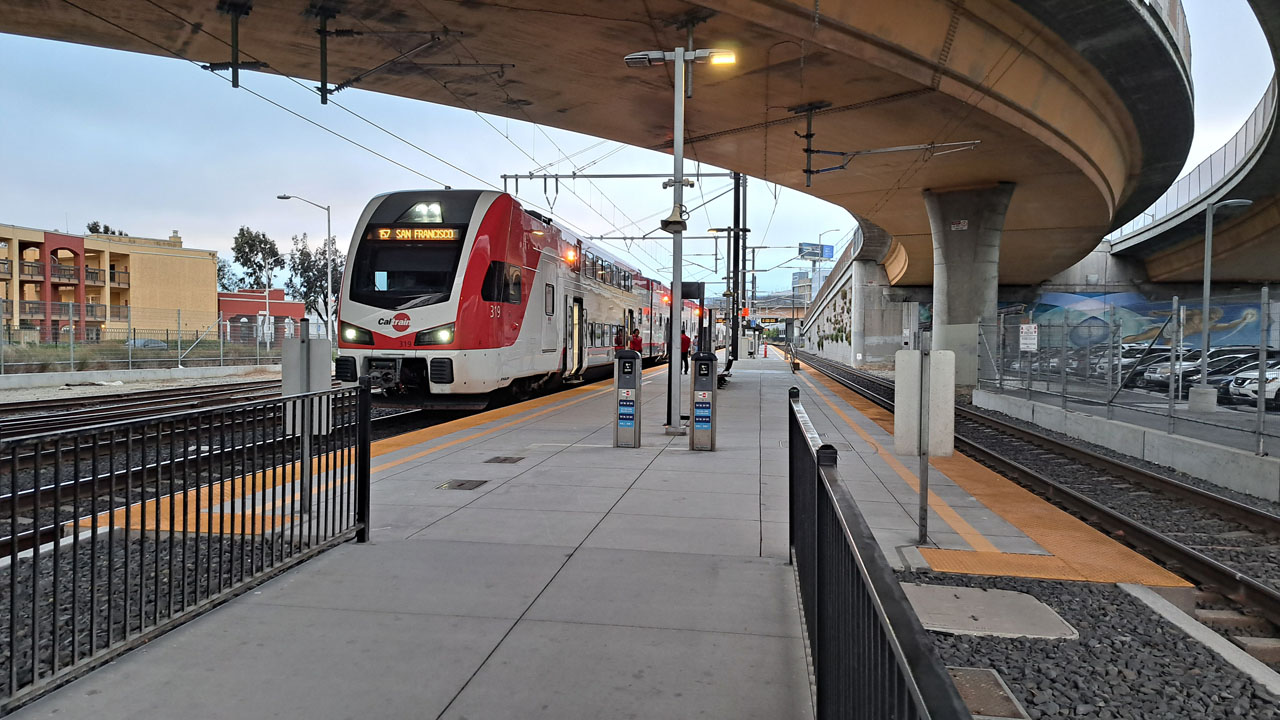
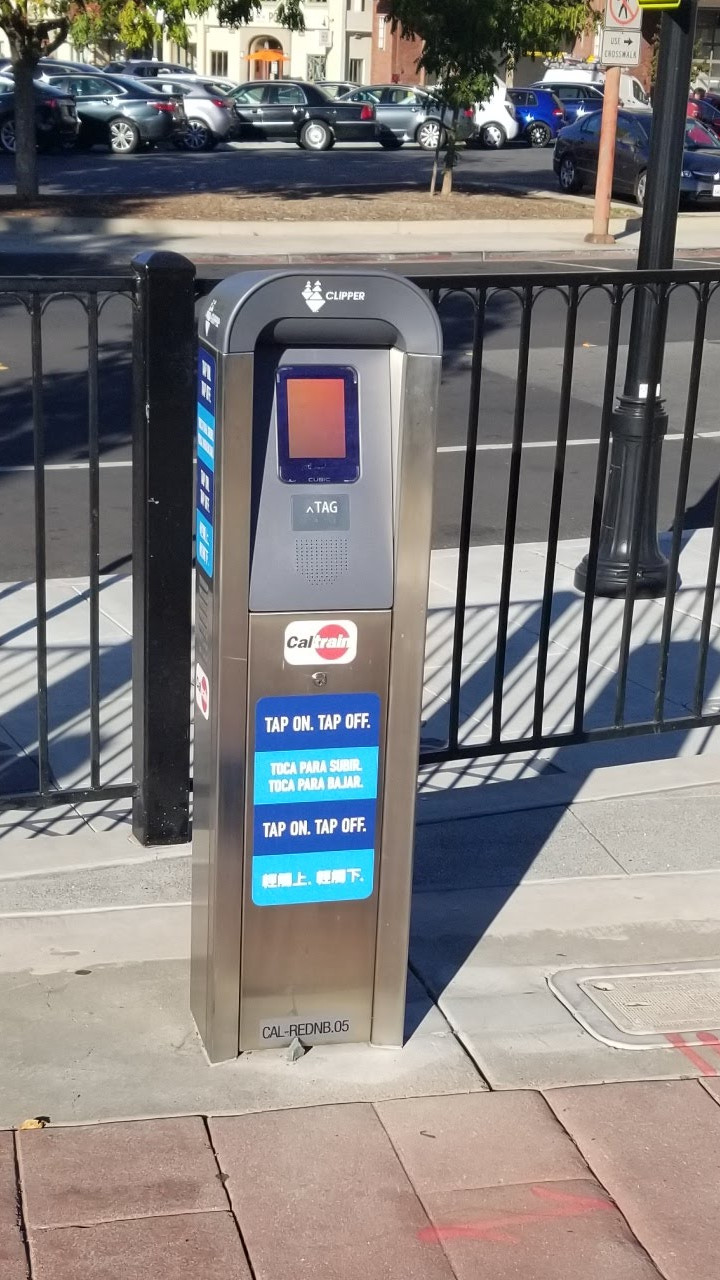
To ride Caltrain with a Clipper or contactless card/device, tap the card or device on the reader at the station before boarding and after exiting. If you forget to tap after exiting, you will be overcharged. When using a paper ticket, buy it at a ticket machine and keep it with you during the ride.
To ride VTA Light Rail with a Clipper or contactless card/device, tap the card or device on the reader at the station before boarding. There’s no need to tag after exiting. If using a paper ticket, purchase it at a ticket machine and keep it with you for the ride.
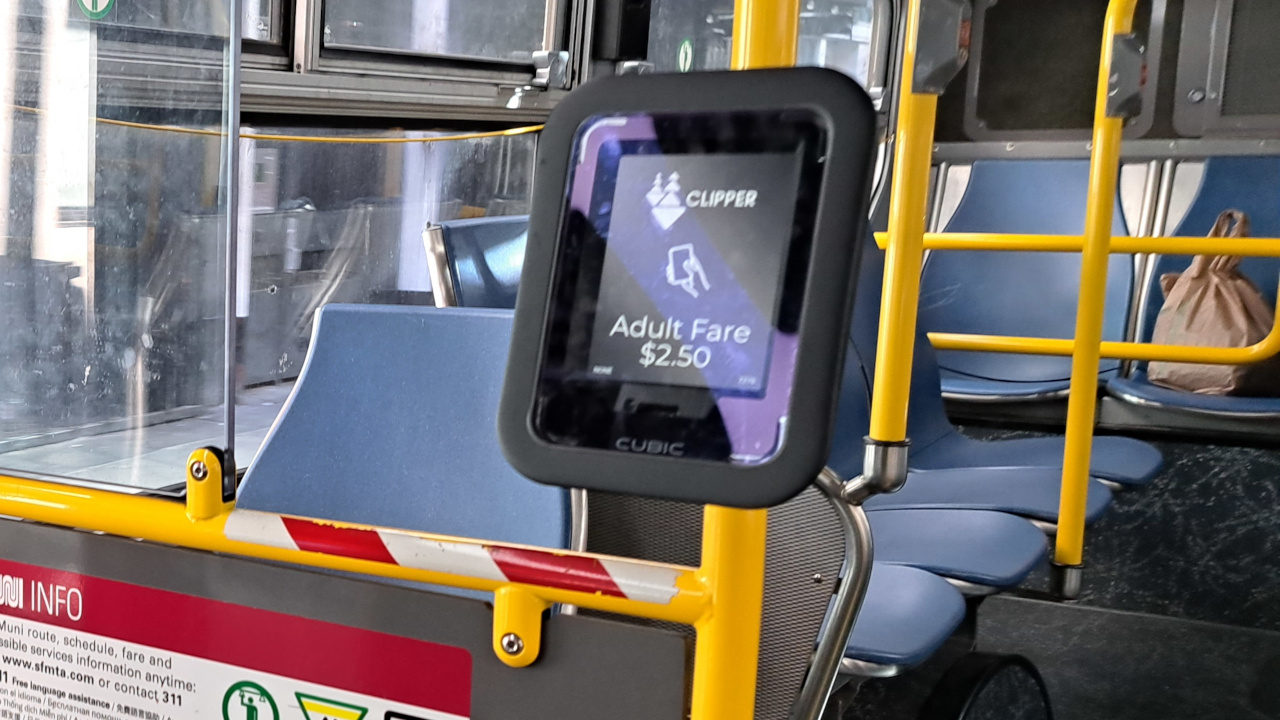
To ride Muni Metro (including the T Line) with a Clipper or contactless card/device, tap the card or device on the reader at the faregate in subway stations or inside the vehicle (near doors) when boarding at surface stops. There’s no need to tag after exiting. For cash or senior/youth riders, buy a paper ticket at subway stations or pay the cash fare at the front of the train when boarding at surface stops.
Parking
One of the main reasons to take transit to Super Bowl LX is to avoid parking concerns, as parking is limited at Levi’s Stadium and at many venues hosting pre-Super Bowl events. Parking at BART and Caltrain stations is generally plentiful.
A parking fee is required on weekdays before 3 pm at BART stations with parking (except Milpitas and Berryessa/North San Jose, where the fee is required seven days a week). The fee varies by station based on demand. Remember your parking spot number and pay at the station using an “add fare” machine behind the faregates with cash or a credit card (Clipper cards are not accepted). You can also pay with the official BART app. Parking is free after 3 pm and all day on weekends.
Parking at Milpitas and Berryessa/North San Jose BART stations requires a fee seven days a week. You can pay online or at a pay station on the ground floor of the parking garage or at the entrance to the surface lot.
At Caltrain stations between San Francisco and San Jose Diridon, a parking fee is required seven days a week. Remember your parking spot number and pay at a ticket machine at the station or with the ParkMobile app. Parking is free at stations south of San Jose Diridon, including Tamien.
Parking is free at VTA Light Rail stations, except at Milpitas BART and Mountain View Caltrain. Light Rail stations generally have smaller parking lots until South San Jose along the Blue Line.